Walther P38 Buyer’s Guide: A Comprehensive Overview (Updated 03/26/2026)
This guide offers detailed insights into the Walther P38, covering pricing, value fluctuations, historical context, and crucial factors for informed purchasing decisions.

The Walther P38 is a historically significant and mechanically fascinating pistol, highly sought after by collectors and shooting enthusiasts alike. Developed in the late 1930s as an improvement over the Luger P08, it served as the standard sidearm of the German Wehrmacht during World War II and beyond. Its innovative double/single-action trigger and robust construction contributed to its reliability and accuracy.
Today, the P38’s appeal extends beyond its military history. It represents a pivotal moment in handgun design, influencing many subsequent pistols. This buyer’s guide aims to equip prospective owners with the knowledge needed to navigate the market, assess condition, understand value, and ensure a successful purchase. We will explore variations, identify key features, and address legal considerations.
Historical Significance of the P38
The Walther P38’s development arose from a German military need for a more modern and reliable sidearm than the Luger P08. Introduced in 1939, it quickly became the standard issue pistol for the Wehrmacht, seeing extensive service throughout World War II. Its robust design and improved ergonomics offered advantages over its predecessor, particularly in harsh combat conditions.
Post-war, production continued under various manufacturers – Walther, Mauser, and Spreewerk – with modifications and adaptations. The P38’s influence extends beyond its wartime service; it served as a blueprint for many subsequent pistol designs. Owning a P38 isn’t just acquiring a firearm; it’s possessing a tangible piece of 20th-century military history.
P38 Variations and Sub-Models
The Walther P38 wasn’t produced as a single, uniform model. Significant variations exist based on manufacturer and production period. Early Walther-produced P38s differ from those made by Mauser or Spreewerk in markings and some component finishes. Post-war models often feature aluminum alloy frames, reducing weight compared to the all-steel wartime versions.
Sub-models include those with different barrel lengths and sight adjustments. Collector interest often focuses on specific production runs or rare variations. Understanding these differences is crucial for accurate valuation and identifying genuine examples. Variations in caliber and generations also impact price and collectibility.
Early Production Walther P38s (1939-1940)
Walther’s initial P38 production run (1939-1940) represents the purest form of the design, highly sought after by collectors. These pistols typically exhibit exceptional fit and finish, reflecting Walther’s pre-war craftsmanship. Serial numbers fall within a relatively low range, making authentication critical. Early models often feature polished blue finishes and walnut grips.
However, these early examples are rare and command premium prices. Identifying original components and verifying the serial number’s authenticity are paramount. Expect to pay a significant premium for a documented, unaltered example in good condition.
Mid-War Production (1941-1943)
P38 production during 1941-1943 saw adjustments due to wartime demands, impacting finish and component materials. Walther continued production, but quality control began to subtly decline as resources were diverted to the war effort. Phosphate and blued finishes became more common, replacing the earlier polished blue. Grip materials shifted, with Bakelite becoming increasingly prevalent.
Serial numbers increased significantly during this period. While still desirable, mid-war P38s generally trade for less than their pre-war counterparts. Careful inspection for replaced parts and signs of hard use is essential when evaluating these pistols.
Late-War Production (1944-1945)
The final years of the war (1944-1945) witnessed the most significant compromises in P38 manufacturing quality. Walther faced severe material shortages, leading to rougher finishes, simplified construction, and increased use of cheaper alloys. Many late-war pistols exhibit a dull grey phosphate finish and often feature laminated wood grips due to Bakelite scarcity.
Serial number ranges continued to climb, but gaps and inconsistencies are common. These pistols are generally the least expensive, but still sought after by collectors. Thorough examination for originality and functionality is crucial, as many require significant restoration.
Post-War Production (Walther, Mauser, Spreewerk)
Following WWII, production of the P38 resumed under various manufacturers. Walther restarted production, alongside Mauser and Spreewerk, initially for police forces and eventually for civilian markets. Post-war pistols generally exhibit higher quality finishes and more consistent manufacturing standards than late-war examples.
These models often feature polished blueing and plastic grips. Identifying the manufacturer is key to valuation, with Walther-produced post-war P38s typically commanding a premium. Serial number ranges are distinct from wartime production, aiding in dating. Inspect for original markings and components to ensure authenticity.
Key Features and Specifications
The Walther P38 is renowned for its innovative design and robust construction. It features a double/single-action trigger mechanism, offering both precision and rapid firing capability. The pistol boasts a 4.9-inch barrel, contributing to its accuracy and manageable recoil. Constructed primarily of steel, the P38 is known for its durability and substantial weight.
Its locking-block breech system enhances reliability. Original P38s chambered 9mm Parabellum ammunition. The pistol’s design prioritized ergonomics, providing a comfortable grip and intuitive controls, making it a favored sidearm for military and law enforcement.
Caliber and Ammunition
The standard caliber for the Walther P38 is 9mm Parabellum (also known as 9x19mm). This widely available cartridge offers a balance of stopping power and manageable recoil, making it suitable for both target practice and self-defense. Original P38s were specifically designed to function optimally with 9mm Parabellum ammunition.
While modern reproductions may be chambered in other calibers, collectors generally prioritize original specifications. Ammunition availability is generally good, though variations in bullet weight and load can affect performance. Ensuring the use of quality ammunition is crucial for reliable operation and accuracy.
Barrel Length and Accuracy
The Walther P38 typically features a barrel length of 4.9 inches (124mm). This length contributes to a good balance between portability and accuracy. The pistol is known for its inherent accuracy, particularly when paired with quality ammunition and proper shooting technique. Original military specifications demanded respectable accuracy for service use.
Accuracy can be affected by barrel condition, wear, and the overall mechanical state of the firearm. Well-maintained P38s consistently deliver tight groupings at typical self-defense and target ranges. Factors like trigger control and shooter skill also play a significant role in achieving optimal results.
Trigger Mechanism (Double/Single Action)

The Walther P38 boasts an innovative double/single-action (DA/SA) trigger mechanism for its time. In double-action mode, the trigger pull is longer and heavier, requiring more force to cock the hammer and release it. Subsequent shots fire in single-action, with a much lighter and crisper trigger pull.
This DA/SA design offered a balance of safety and speed. The longer DA pull provided an added safety feature, while the SA follow-up shots were quick and accurate. Experienced shooters appreciate the control offered by this system, and it remains a defining characteristic of the P38.
Construction Materials and Durability
The Walther P38 is renowned for its robust construction, primarily utilizing high-quality steel throughout the majority of its components. The frame, slide, and barrel are typically forged steel, contributing to the pistol’s substantial weight and inherent durability. Early models featured machined parts, while later production runs incorporated more stamped components to expedite manufacturing;
Despite variations in production methods, the P38 generally exhibits excellent longevity. Proper maintenance and care are crucial, but the pistol’s solid construction allows it to withstand considerable use and remain reliable over decades. This durability is a key factor in its collectibility.
Identifying Genuine Walther P38s
Authenticating a Walther P38 requires careful examination of several key features. Start by locating the serial number, typically found on the left side of the frame, and researching its corresponding production date. Verify the presence of correct proof marks and manufacturer codes – Walther, Mauser, or Spreewerk – which are specific to each producer;
Inspect all parts for originality; mismatched or non-factory components are red flags. Be wary of refinished pistols or those with obvious restorations. Thoroughly research markings and compare them to known authentic examples. Consulting with experienced collectors or appraisers is highly recommended for accurate identification.
Serial Number Location and Dating
The Walther P38 serial number is primarily located on the left side of the receiver, typically stamped into the metal. Determining the year of manufacture from the serial number is crucial for assessing value and authenticity. Serial numbers provide a timeline of production, helping to pinpoint the pistol’s origin and potential variations.
Resources exist online and in collector’s guides detailing serial number ranges and corresponding production periods. However, variations and gaps in numbering can occur. Cross-referencing with other markings and features is essential for accurate dating. A higher serial number doesn’t always equate to later production.
Proof Marks and Manufacturer Codes
Walther P38s, and those produced by Mauser and Spreewerk, feature distinct proof marks and manufacturer codes vital for authentication. These markings indicate acceptance testing and the facility responsible for production. Walther pistols typically bear “WaA” (Wehrmacht Acceptance) marks, while Mauser uses its “SVW” code and Spreewerk employs “axe” markings.
Understanding these codes confirms originality and helps trace the pistol’s history. Variations in proof mark placement and style can indicate different production periods. Counterfeit or altered markings are common, so careful examination is crucial. Detailed reference guides are available to decipher these codes accurately.
Inspecting for Original Parts
Authenticity hinges on verifying original components in a Walther P38. Examine the slide, frame, barrel, and internal mechanisms for matching serial numbers and correct manufacturer markings. Non-matching numbers suggest replacement parts, potentially diminishing value. Pay close attention to the finish; inconsistencies can indicate refinishing or alterations.
Original grips should match the production era and show appropriate wear. Inspect the magazine for correct markings and construction. Be wary of excessively polished or new-looking parts on older pistols. Thorough inspection, aided by detailed reference materials, is essential for confirming originality.
Recognizing Red Flags (Restorations, Replicas)
Beware of potential issues when evaluating a Walther P38. Excessive wear in unusual patterns, or overly-new finishes, can signal a restoration attempting to mask wear. Inspect for poorly executed repairs or mismatched parts. Replicas often lack the precise markings and quality of original manufacture.
Be cautious of suspiciously low prices, a common tactic for selling misrepresented firearms. Examine the serial number’s font and placement; inaccuracies are red flags. Thoroughly research the seller’s reputation and request detailed photographs before committing to a purchase. Due diligence is crucial to avoid costly mistakes.
Walther P38 Value and Pricing
Determining a Walther P38’s value requires careful consideration of several factors. Condition is paramount, with pristine examples commanding significant premiums. Rarity, based on production year and manufacturer (Walther, Mauser, Spreewerk), heavily influences price. Caliber and barrel length also play a role, as do any original accessories included.
Market demand fluctuates, impacting pricing trends. Recent data indicates price sensitivity to historical significance and collectibility. Blue Book of Gun Values provides a starting point, but expert appraisal is recommended for accurate valuation. Understanding these elements ensures a fair transaction.
Factors Affecting P38 Value
Several key elements dictate the monetary worth of a Walther P38. Originality is crucial; any replaced parts diminish value. Production year significantly impacts price, with earlier war models often being more desirable. Manufacturer – Walther, Mauser, or Spreewerk – also plays a role, with Walther generally commanding higher prices.
Condition is paramount, ranging from “as new” to heavily worn. Serial number ranges can indicate specific production blocks and influence collectibility. Documentation, like original boxes or papers, adds substantial value. Finally, market trends and collector demand contribute to overall pricing.
Current Market Prices (Walther)
As of March 26, 2026, Walther P38 pricing exhibits considerable variation. Excellent condition, pre-1945 Walther P38s typically range from $2,500 to $4,500, depending on specific features and documented history. Post-war Walther models in good condition generally sell between $1,800 and $3,000.
Prices are heavily influenced by originality, with restored or refinished pistols fetching lower amounts. Rare variations or those with documented provenance can exceed these ranges. Auction results and dealer listings indicate a steady demand, with prices remaining relatively stable over the past year.
Current Market Prices (Mauser)
Mauser-produced P38s generally command slightly lower prices than their Walther counterparts. In excellent condition, pre-1945 Mauser P38s typically sell between $2,000 and $3,800, contingent on markings and overall condition. Post-war Mauser models in good working order range from $1,600 to $2,800.
Collector interest remains strong, but Mauser P38s are often viewed as slightly less desirable than Walther examples. Originality is paramount, and any evidence of refinishing or parts replacement will negatively impact value. Market trends suggest a moderate increase in prices over the last twelve months.
Current Market Prices (Spreewerk)
Spreewerk P38s, known for their unique features, often fall in a mid-range price bracket. Excellent condition, early Spreewerk models (pre-1945) can fetch between $2,200 and $4,000, depending on rarity and markings. Post-war Spreewerk pistols in good condition generally sell for $1,800 to $3,000.
The presence of specific Spreewerk markings, like those indicating early production runs, can significantly increase collector value. As with other P38 variants, originality is key; restored or modified pistols will be worth less. Current market demand remains steady, with prices showing a slight upward trend.
Condition Grading for P38s
Accurate condition assessment is vital for determining a P38’s value. Grading typically follows a scale: Mint (unfired, flawless), Excellent (95-99% original finish), Very Good (80-94% finish, minor wear), Good (60-79% finish, noticeable wear), and Fair (below 60%, significant wear). Original finish retention heavily influences value.
Inspect for pitting, rust, and replaced parts. Matching numbers (frame, slide, barrel) are crucial for higher grades. A P38’s mechanical function also impacts its condition score; a fully functional pistol commands a premium. Understanding these terms ensures fair transactions.
Understanding Condition Terminology
Precise language defines a P38’s condition, impacting its market value. “Mint” signifies an as-new firearm, rarely encountered. “Excellent” denotes 95-99% original finish with minimal wear. “Very Good” shows 80-94% finish, with light handling marks. “Good” indicates 60-79% finish, displaying noticeable wear and potential minor repairs.
“Fair” signifies significant wear, often below 60% original finish. “Refinished” means the original finish has been replaced. “Parts Gun” indicates non-original components. Knowing these terms prevents misrepresentation and ensures informed buying or selling decisions.
Impact of Condition on Value
A Walther P38’s condition is the primary driver of its value. Even slight variations significantly affect pricing; a “Mint” example commands a substantial premium. “Excellent” condition pistols retain high value, while “Very Good” offers a balance of affordability and collectibility.
As condition declines – “Good,” “Fair,” or “Refinished” – value decreases proportionally. Originality is key; restored or modified P38s typically sell for less. Thorough assessment, utilizing established grading standards, is crucial for both buyers and sellers to establish a fair market price.
Assessing Wear and Tear
Careful examination reveals a P38’s history and impacts value. Check for finish loss, particularly on high-wear areas like the slide and grip frame. Inspect the bore for pitting or corrosion, indicating heavy use or improper storage. Examine the grip panels for cracks, chips, or replacements.
Pay close attention to the locking lugs and rails for excessive wear, affecting functionality. Evaluate the trigger pull for smoothness and consistency. Document all observed wear, as it directly influences the condition grade and, consequently, the pistol’s market value;
Where to Buy a Walther P38
Several avenues exist for acquiring a Walther P38, each with unique advantages. Reputable online auction sites offer broad selections, but require diligent research and verification of seller credentials. Gun shows and local dealers provide in-person inspection opportunities, fostering trust and immediate assessment.
Specialty collectibles dealers often possess expertise and curated inventories of authentic P38s, though typically at a premium. Thoroughly vet any source, prioritizing those with established reputations and clear return policies. Always confirm legal compliance before finalizing any purchase.
Reputable Online Auction Sites
Navigating online auctions requires caution when seeking a Walther P38. GunBroker.com is a frequently cited platform, offering a substantial volume of firearms, including P38s, but demands careful scrutiny of listings. Examine seller ratings, detailed descriptions, and high-resolution photographs meticulously.
Prioritize auctions with clear shipping policies adhering to all federal and state regulations. Be aware of potential buyer’s premiums and shipping costs. Verify the auction site’s dispute resolution process before bidding; Independent verification of the firearm’s authenticity is strongly advised post-purchase.
Gun Shows and Local Dealers
Attending gun shows and visiting local firearms dealers offer hands-on inspection opportunities. Gun shows provide a diverse selection, allowing direct examination of potential purchases and negotiation with sellers. However, verify the seller’s credentials and ensure compliance with all legal requirements.
Local dealers often provide expertise and may offer warranties or return policies. Building a relationship with a reputable dealer can be advantageous. Always request to thoroughly inspect the P38, checking for originality and condition. Compare prices across multiple sources before committing to a purchase.
Specialty Collectibles Dealers
Specialty dealers focusing on military firearms, particularly WWII-era collectibles, are excellent resources for P38s. These dealers possess in-depth knowledge of variations, markings, and historical significance, aiding in authentication and valuation. They often curate collections of investment-grade handguns, ensuring provenance and originality.
Expect higher prices compared to general gun shows or online auctions, reflecting their expertise and the quality of firearms offered. Thoroughly vet the dealer’s reputation and request detailed documentation regarding the P38’s history and condition. A certificate of authenticity can be invaluable for collectors.
Legal Considerations for P38 Ownership
Due to its military history and potential import restrictions, P38 ownership requires careful attention to federal, state, and local laws. Federal regulations govern firearm sales and transfers, while state laws vary significantly, potentially restricting magazine capacity or requiring specific permits.
Import restrictions may apply to P38s brought into the US, particularly those originating from countries with current trade embargos. A Curio & Relic (C&R) license can simplify interstate purchases of qualifying P38s, but eligibility criteria apply. Always verify compliance with all applicable laws before attempting a purchase or transfer.
Federal and State Regulations
Navigating P38 ownership begins with understanding federal firearm regulations, primarily the National Firearms Act (NFA) and Gun Control Act (GCA). These laws dictate who can own a firearm, background check requirements, and permissible interstate transfers.
However, state laws introduce significant complexity. Some states restrict magazine capacity, require permits for handgun purchases, or ban certain features. California, New York, and Massachusetts have particularly stringent regulations. It’s crucial to research your state and local laws before acquiring a P38 to ensure full compliance and avoid legal issues.
Import Restrictions
Importing a Walther P38 into the United States is subject to strict regulations enforced by the Bureau of Alcohol, Tobacco, Firearms and Explosives (ATF). Generally, P38s manufactured after 1994 are considered “non-importable” due to restrictions on certain firearm features.
Older P38s, particularly those with historical significance (e.g., WWII-era models), may be importable, but require extensive documentation and ATF approval. These imports often fall under Curio & Relic (C&R) licensing requirements. Navigating these regulations can be complex; consulting with a customs broker specializing in firearms is highly recommended to ensure legal compliance.

C&R License Requirements
A Curio & Relic (C&R) license simplifies the acquisition of certain Walther P38s, particularly those manufactured before 1899 or deemed to be significant historical artifacts. Obtaining a C&R license requires meeting specific criteria set by the ATF, including demonstrating a genuine interest in firearm history and passing a background check.
With a C&R license, you can purchase eligible P38s from licensed dealers or other C&R holders across state lines, bypassing some standard firearm transfer regulations. However, state and local laws still apply. It’s crucial to verify the P38’s eligibility before purchase.
Maintenance and Care
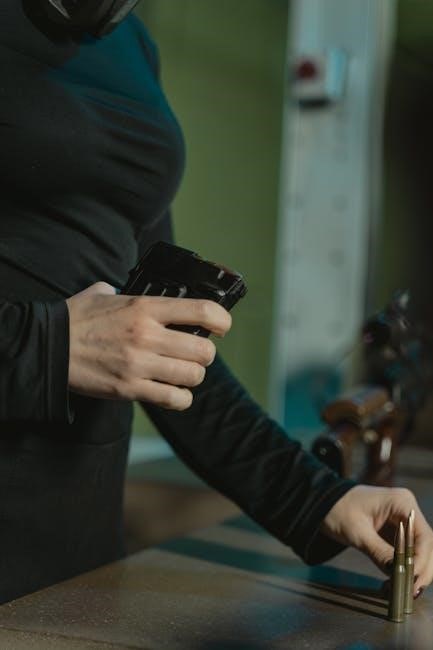
Proper maintenance is vital for preserving the functionality and value of your Walther P38. Regular cleaning after each use removes powder residue and prevents corrosion. Utilize a quality gun cleaning solvent and a soft brush, focusing on the barrel, slide rails, and internal components.
Lightly lubricate key friction points with a gun oil designed for firearms. Safe handling practices, including keeping the weapon unloaded when not in use, are paramount. For long-term storage, ensure the P38 is thoroughly cleaned, lightly oiled, and stored in a dry, secure location.
Cleaning and Lubrication
Consistent cleaning and lubrication are essential for a reliable Walther P38. After each firing session, disassemble the pistol following the manufacturer’s instructions. Employ a quality gun solvent to remove carbon buildup and fouling from the barrel, slide, and frame. A soft brush aids in reaching tight spaces.
Apply a thin coat of quality gun oil to all moving parts – slide rails, locking lugs, and trigger mechanism – to reduce friction and prevent wear. Avoid over-lubrication, as it can attract dirt. Wipe off excess oil with a clean cloth before reassembly and storage.
Safe Handling Practices
Prioritize safety when handling your Walther P38. Always treat every firearm as if it’s loaded. Keep your finger off the trigger until ready to fire, and never point the muzzle at anything you aren’t willing to destroy. Ensure a safe backstop when shooting.
Properly secure the pistol during cleaning and maintenance. Familiarize yourself with the P38’s safety mechanisms and double-action/single-action operation. Store the firearm unloaded in a locked safe or secure location, inaccessible to unauthorized individuals, especially children.
Long-Term Storage
Proper long-term storage preserves your Walther P38’s condition and functionality. Thoroughly clean and lubricate the pistol before storage, protecting all metal surfaces from corrosion. Utilize a silicone-treated gun sock or wrap in corrosion-inhibiting paper; Store in a cool, dry environment with consistent temperature and humidity.
A secure gun safe is essential, protecting against theft and unauthorized access. Avoid storing firearms in basements or attics prone to moisture. Periodically check the pistol for signs of rust or deterioration, reapplying lubrication as needed.
Common P38 Issues and Troubleshooting
Walther P38s, while robust, can exhibit certain issues with age. Common problems include difficulty with slide retraction, particularly in early models, often due to accumulated grime or wear. Trigger malfunctions, like failure to reset, can stem from worn springs or improper lubrication. Inspect the firing pin and extractor for damage or wear, impacting reliability.
Magazine issues, such as feeding problems, are frequent; ensure magazines are clean and properly functioning. If encountering persistent issues, consult a qualified gunsmith specializing in P38s for diagnosis and repair.